PCCA Cotton Market Weekly
August 31, 2026
The Week Ahead
Cotton finished the final full week of August with continued momentum after December futures hit a life-of-contract high, posting a strong week of gains. The fundamentals have not changed, but speculative buying has continued to fuel this market. Attention will remain focused on demand as this recent rally has some mills waiting on the sidelines.
- Speculative buying continues to be the biggest driver for cotton as fundamentals haven’t changed. Funds continue to buy into agricultural markets, pushing cotton higher and setting new highs last week. Crowded positions get even tighter as managed-money net longs continue to increase, which has folks wondering: If a technical pullback is coming?
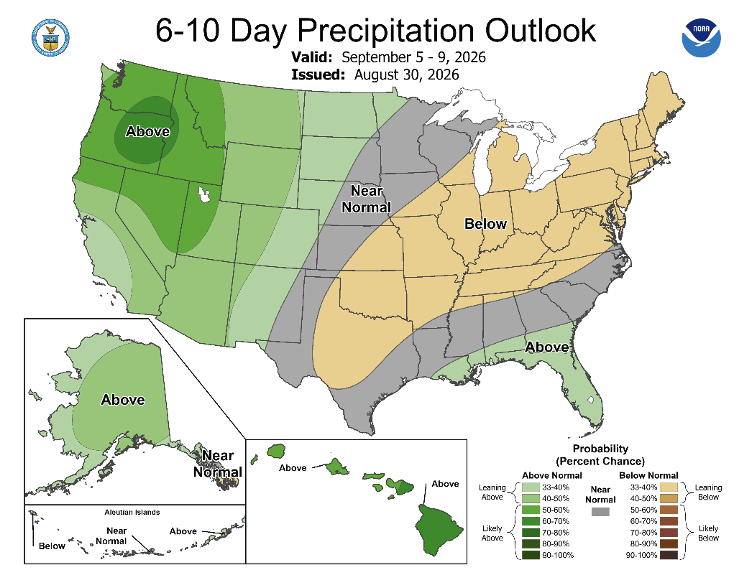
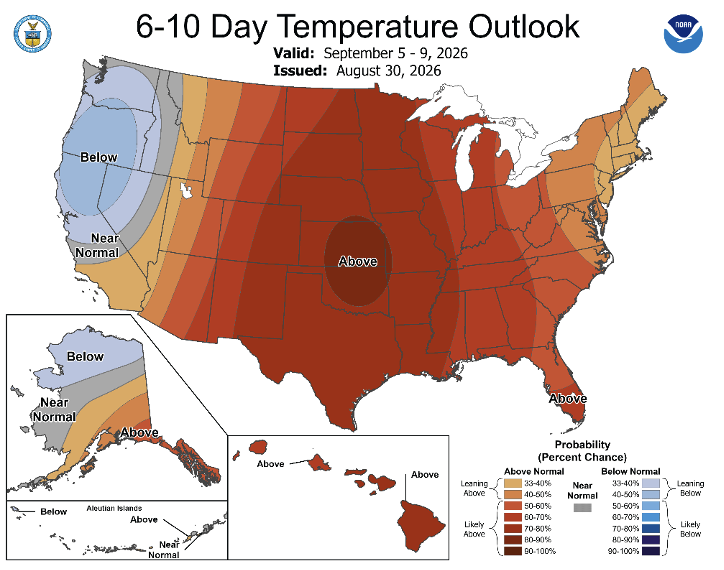
- Today’s Crop Progress report will give the first look at crop conditions heading into the month of September. With ginning underway in South Texas, we enter a critical period for West Texas, Oklahoma, and Kansas as conditions continue to decline, further stressing this crop. Abandonment and yield reductions take center stage as the fundamentals are expected to remain highly supportive.
- Outside markets present a more challenging backdrop following last week’s hawkish monetary signals; the U.S. dollar has strengthened, creating a fresh headwind for the commodity sector. However, with crude oil remaining volatile and grain markets holding firm, cotton’s tight underlying fundamentals should help insulate it from broader macroeconomic pressure.
 Market Recap
- Cotton continued the push sharply higher last week, with December futures settling at 91.38 cents per pound, up 303 points on the week. This marks the second week in a row of greater than 300 points gains, which set a new life-of-contract high on Thursday of 92.75 cents per pound. The market gained momentum following an export sales report that exceeded expectations for some, with demand remaining a primary focus. Volume remained strong throughout the week, and open interest continued to increase, signaling new speculative money flowing into the market.
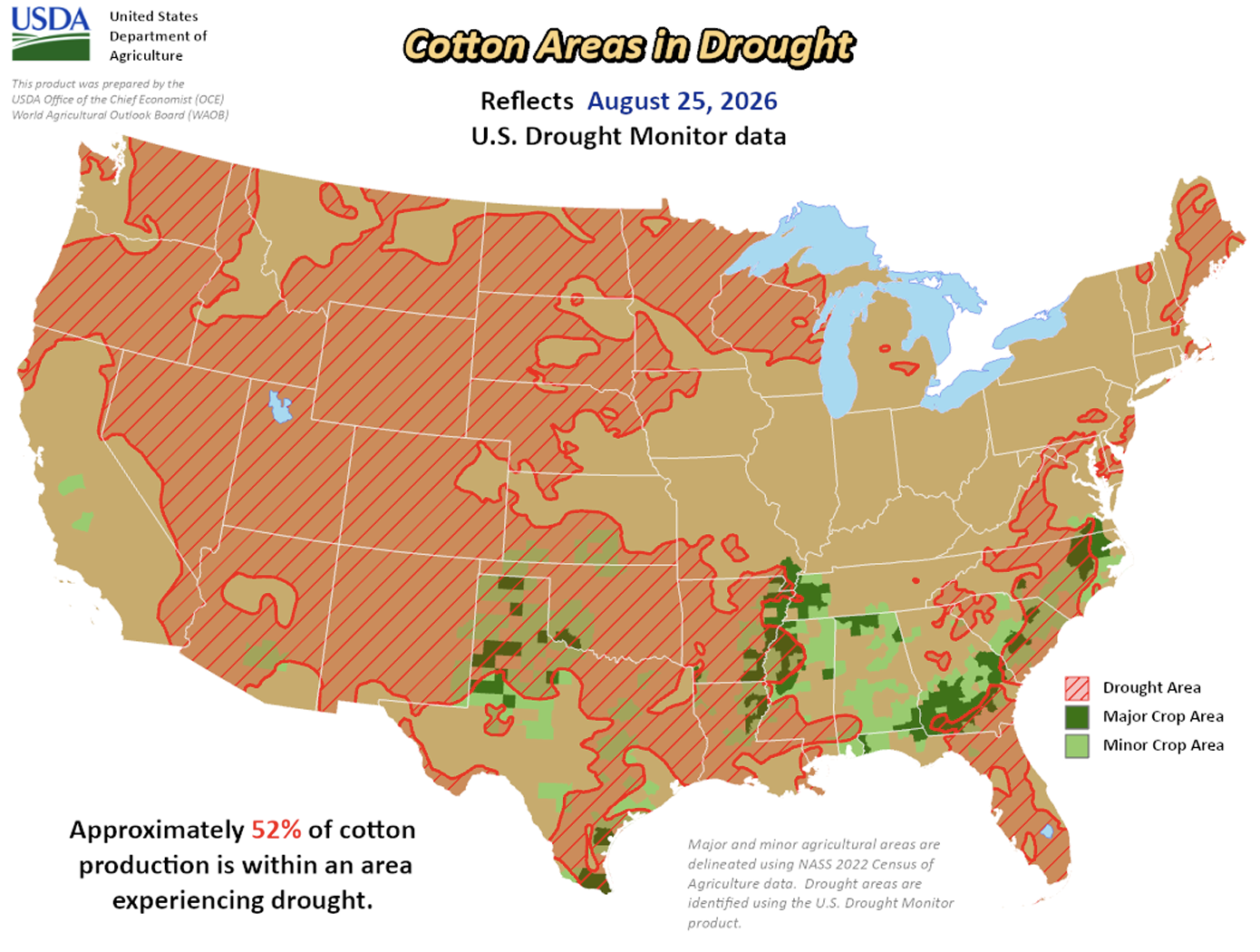
- Weather conditions continue to decline, keeping the supply side of the market a primary concern. For the fourth straight week, U.S. crop conditions declined with the drought expanding across the Cotton Belt. All of Oklahoma’s cotton area remains in drought, with 37% in exceptional drought, along with 98% in Kansas and 72% in Texas. Rain has been spotty at best, with limited coverage, as the forecast remains hot and dry with an unfavorable outlook.
- Fed Chair Kevin Warsh delivered his remarks on Friday at the Jackson Hole Economic Symposium. Warsh’s remarks were hawkish (signaling a higher interest rate policy) as he reiterated that inflation remains a “predominant concern,” raising expectations that a September rate hike may be in the cards. His comments provided some U.S. dollar strength and contributed to some profit-taking as the market took a bit of a breather on Friday.
- On-call data continues to provide support, as the gap between unfixed sales exceeding unfixed purchases widened, increasing 6,603 contracts since the last report to 11,471, signaling more buying that will eventually need to take place as contracts are priced. China’s reserve auctions continued last week, maintaining a 100% clearance rate across all sessions. While the daily release volume has averaged approximately 8,000 metric tons (MT), it briefly surged to 12,000 MT on Monday, August 24, before reverting to the 8,000 MT, putting cumulative reserve sales above 240,000 MT.
 Economic and Policy Outlook
- On the macro front, July’s Personal Consumption Expenditures (PCE) report, the Federal Reserve’s preferred measure of inflation, was released last Wednesday. Headline PCE rose 3.7% year-over-year, while core inflation remained elevated at 3.3%, both matching June’s pace and slightly exceeding expectations of 3.6%. This data reinforced the hawkish comments delivered by Fed Chair Kevin Warsh later in the week at Jackson Hole, confirming that the central bank’s fight against inflation is far from over and keeping the U.S. dollar broadly supported as an underlying headwind for the commodity sector.
- Following the collapse of bilateral trade talks with Canada, 50% tariffs remain in place on roughly $20 billion of Canadian goods. On Tuesday, Canada officially released its final retaliation list and specific tariff rates, which will take effect next week on September 8. The Canadian countermeasures range from 15% to 50% and target over 700 U.S. exports, hitting sectors like dairy and agricultural equipment with a 25% levy. While there is technically still a brief window for negotiations before September 8, it is closing fast, and most are not optimistic, fearing further escalation before any resolution.
Supply and Demand Overview
- For the week ending August 20, upland net sales for 2026/27 totaled 95,700 bales, led by Vietnam, Guatemala, and Bangladesh, with others close behind. It was good to see multiple markets reported, as this report added fuel to last week’s rally. Vietnam purchased 19,000 bales, with Guatemala adding 14,400, Bangladesh at 14,000, Peru at 13,900, and India at 13,800. Hong Kong and Turkey posted reductions.
- Upland exports reached 181,000 bales, a modest decrease from the 222,000 reported last week. Vietnam led shipments, followed by Pakistan, India, Turkey, and Mexico.
- Pima net sales totaled 2,100 bales, with India, Turkey, and Bangladesh accounting for most of the volume. Pima exports reached 8,600 bales, led by India and Bangladesh.
- Overall, the report exceeded some expectations as the market saw its strongest rally following the release. Sales remain well-spread across markets, and China’s reserve auctions continue to sell out, with U.S. cotton making up the largest portion sold. However, most will continue to monitor demand closely as the recent rally has seen some mills hold off on placing new orders.
The Seam®
- As of Friday afternoon, grower offers totaled 665 bales. The past week, 372 bales traded on the G2B platform received an average price of 83.81 cents per pound. The average loan redemption rate (LRR) was 56.49, bringing the average premium over the LRR to 27.32 cents per pound.
Note: The Loan Redemption Rate (LRR) is the loan rate minus the current Loan Deficiency Payment (LDP).