PCCA Cotton Market Weekly
September 28, 2026
The Week Ahead
Cotton has a chance to find its footing this week, but it will need some help. There are a few things working in its favor, but demand and outside markets will have a lot to say about where we go from here.
- China gave cotton something to work with over the weekend, but maybe not enough to get too excited about just yet. Raw cotton is included on China’s list of U.S. products set to receive more favorable tariff treatment, which should be supportive for the U.S. cotton trade. But there were no specific agricultural purchase commitments from the summit, so anyone hoping for a bigger demand announcement was probably left wanting more. For cotton, it is a step in the right direction, but we still need to see it turn into actual business.
- Outside markets could keep things interesting this week, too. Inflation and employment data will give the market another read on whether the Fed has more work to do, while expectations for another rate hike have already helped keep the dollar firm. With crude also backing off late last week, the macro side has not been doing cotton many favors.
- The U.S. crop is another piece to watch as harvest moves along. There are still plenty of questions across the Southwest, and USDA likely has some room to come down from its current estimate. With the next supply and demand update coming on October 9, harvest results over the next couple of weeks could be important in shaping expectations.
Market Recap
- Cotton finally put a green week on the board, with December futures gaining 156 points to settle at 82.71 cents per pound. Most of that work was done Monday, when December jumped 227 points on encouraging U.S.-China headlines. The rest of the week was much quieter, and Friday turned into a back-and-forth trade as the market tried to make sense of what came out of the Trump-Xi meeting.
- China’s reserve auctions will also wrap up on September 30 after a strong run of sales. That takes away one demand signal we have been watching, but the latest trade developments give the market something else to watch as we head into the fall.
- There are still some supportive pieces underneath the market. Funds did a pretty good amount of selling last week, but cotton held together and still finished the week higher. That does not mean we are out of the woods yet, but it was a better response than we have seen lately.
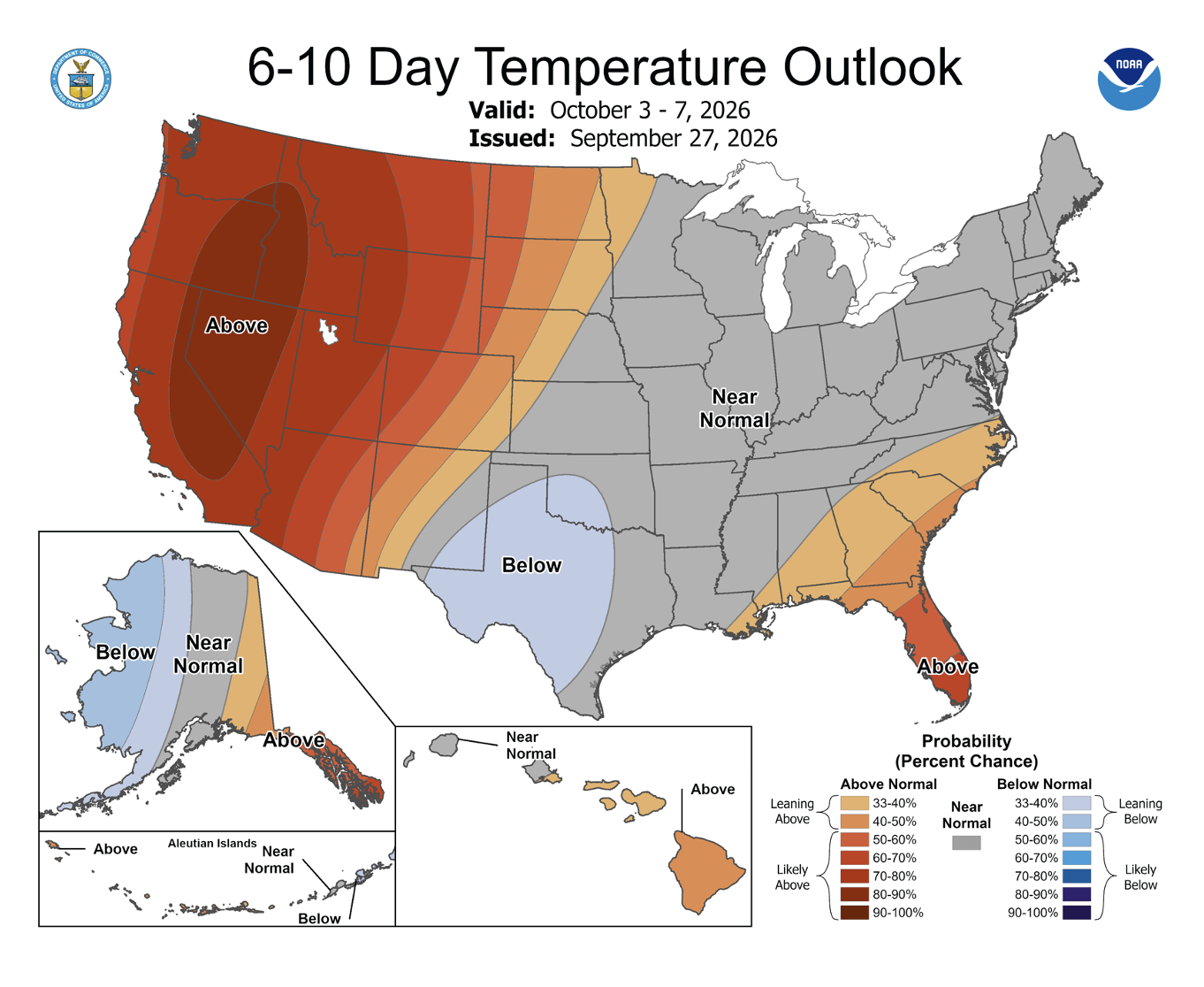
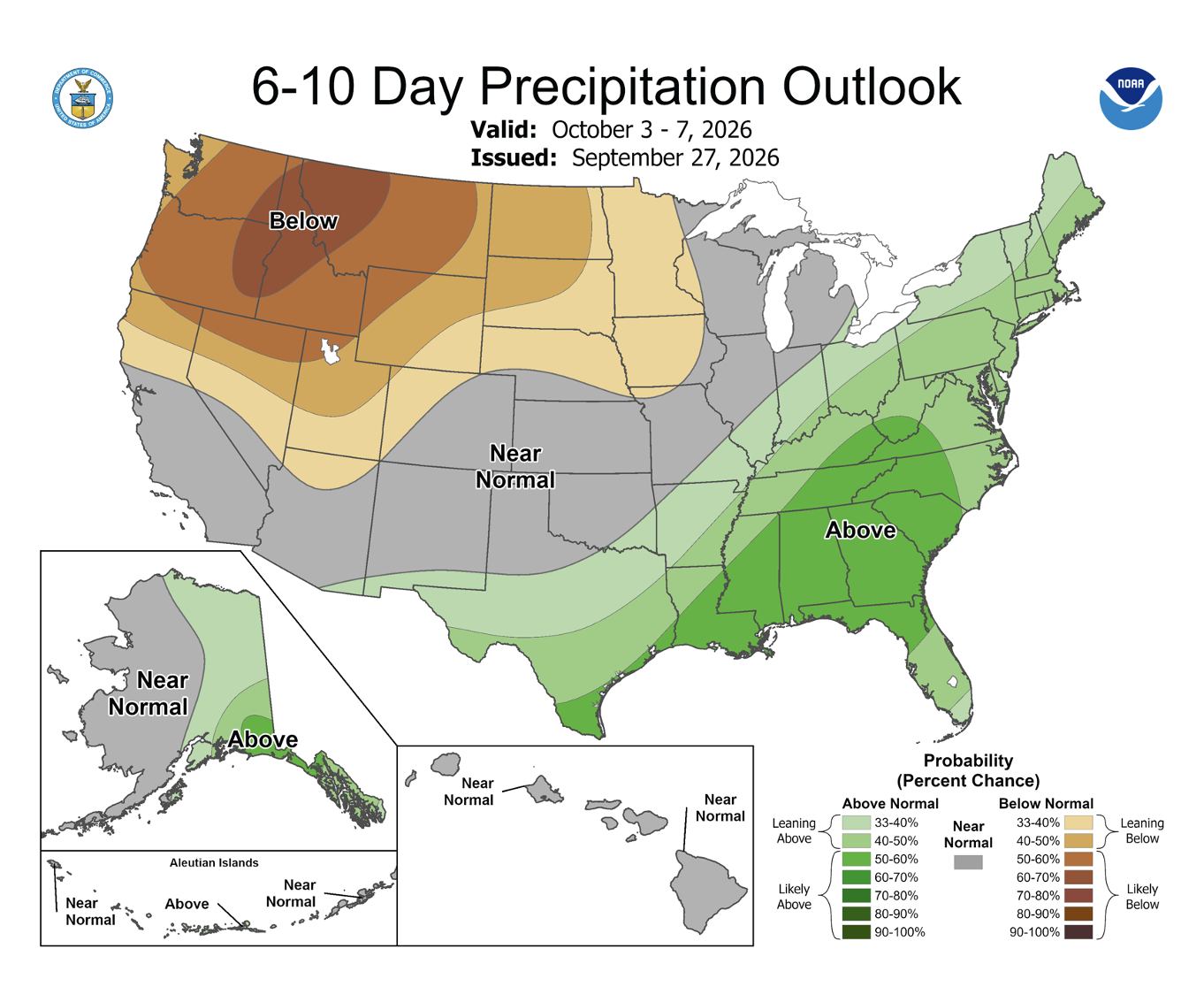
- Harvest is moving along, but weather became more of a concern across the Southwest last week. West Texas picked up some pretty good rain, with more in the forecast. At this point, that moisture is coming too late to add much to yield and could create some quality concerns as more of the crop opens up and harvest gets underway.
 Economic and Policy Outlook
- There is finally a little more clarity on what the U.S.-China agreement could mean for cotton. Raw cotton is included on China’s list of U.S. products set to receive more favorable tariff treatment, which could make U.S. cotton more competitive going into the Chinese market. Cotton yarn and fabric are not included on the U.S. list, so the more immediate benefit looks to be on the raw cotton side. The two countries are also establishing an agricultural working group to address market access, providing cotton with another avenue for progress beyond this initial agreement.
- The Buying American Cotton Act picked up some more momentum last week, reaching 100 co-sponsors in the House. Support now spans both parties and much of the country, which is a strong signal for a bill aimed at boosting demand for U.S. cotton and supporting domestic textile manufacturing. The White House also backed the legislation earlier this month, adding another positive piece as the industry works to move it forward.
- The U.S. and Iran still look far apart on reopening the Strait of Hormuz, keeping energy markets and the broader economy on edge. With a major share of global oil and gas normally moving through the Strait, a prolonged disruption could keep energy costs and inflation elevated, complicating the Fed’s job and weighing on economic growth. For cotton, that is a mixed bag: higher crude can make synthetic fibers more expensive relative to cotton, but the bigger concern is higher inflation, a firmer dollar, and slower consumer demand if elevated energy costs stick around.
Supply and Demand Overview
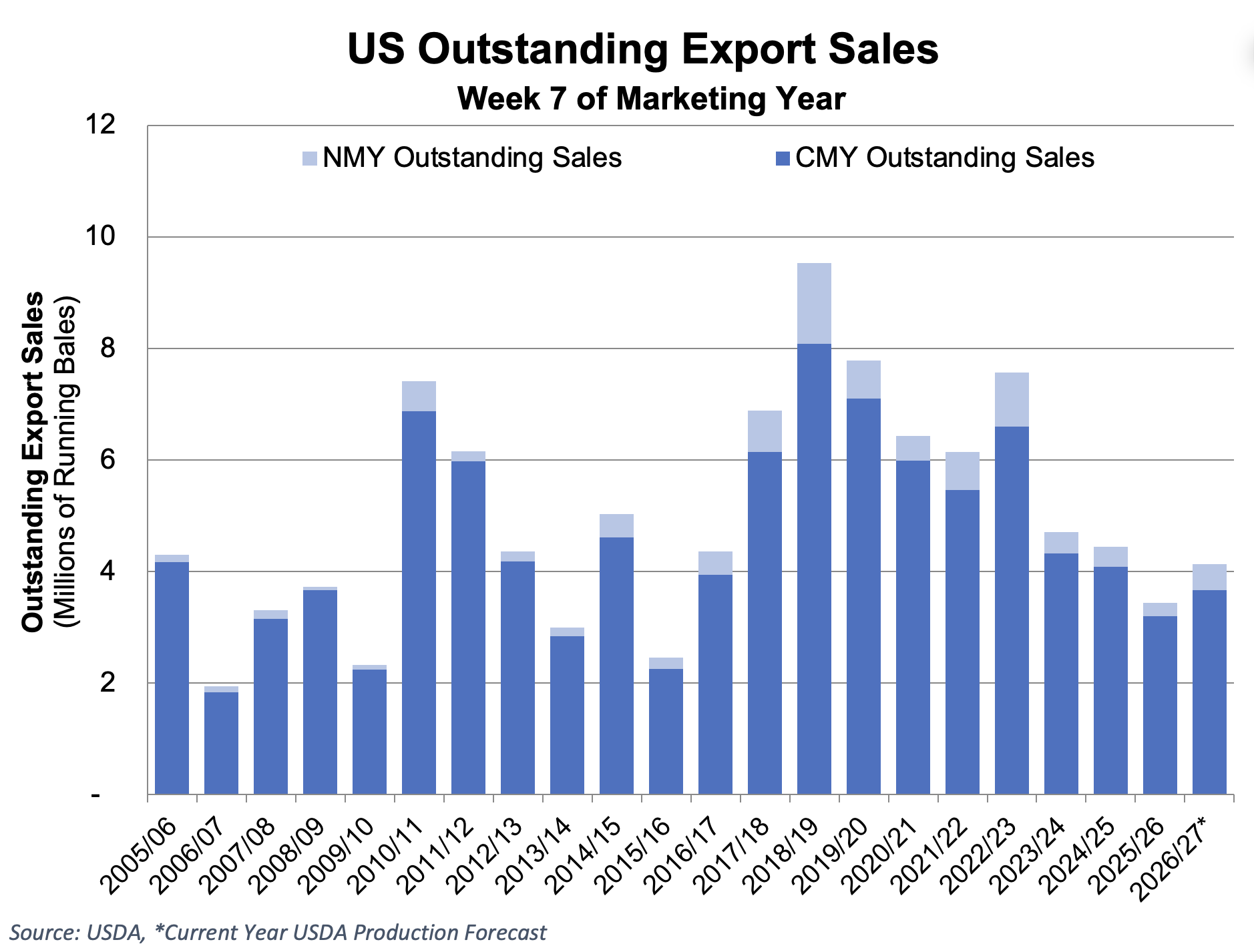
- Upland net sales jumped to 230,500 bales for the week, a pretty big improvement from the 71,200 bales reported last week. Mexico led purchases, followed by Vietnam, Pakistan, and India. We have been waiting to see buyers take advantage of lower prices, and this was finally a better week on the demand side.
- Upland exports also improved, reaching 164,700 bales for the week. Vietnam was the top destination, followed by India and Pakistan. Shipments are still not particularly strong, but at least moved in the right direction this week.
- Pima net sales totaled 4,800 bales, while exports improved to 11,700 bales. Bangladesh led purchases for the week, while India was the largest destination for shipments.
- This was a much better sales report, but one good week does not change the demand picture just yet. Lower prices finally seemed to bring some buyers back to the table, and the additional sales booked for next year were encouraging too. Now we need to see some consistency and, more importantly, better shipments to start making up ground.
 The Seam®
- As of Friday afternoon, grower offers totaled 3,156 bales. The past week 1,830 bales traded on the G2B platform received an average price of 78.33 cents per pound. The average loan redemption rate (LRR) was 58.24, bringing the average premium over the LRR to 20.09 cents per pound.
- Note: The Loan Redemption Rate (LRR) is the loan rate minus the current Loan Deficiency Payment (LDP).